
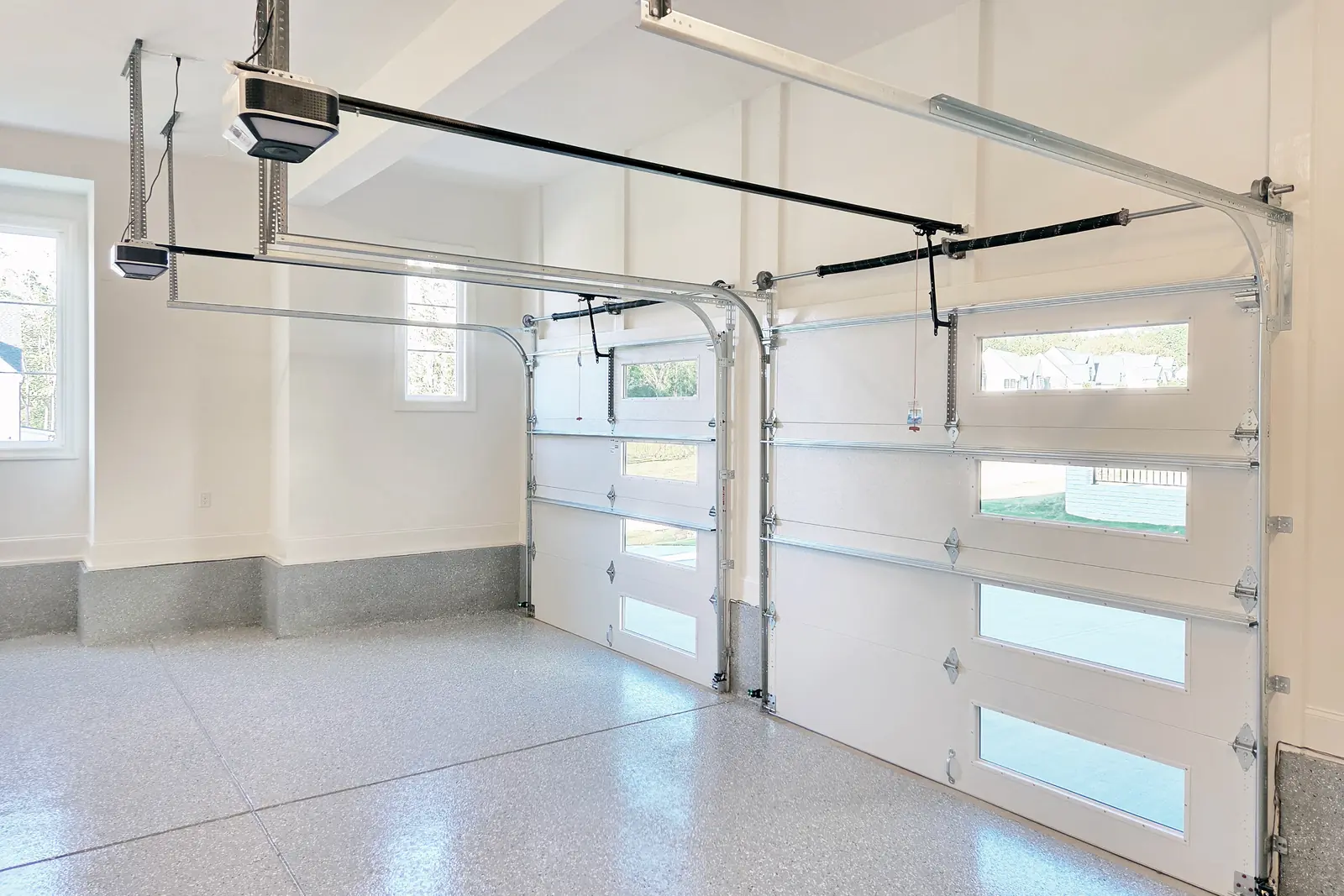
Garage door spring replacement starts with one key decision: a single torsion spring or a dual-spring system. Both setups lift the same door, yet they behave very differently under daily stress. Consequently, the choice affects your upfront cost, long-term safety, and how soon you face another repair. In San Diego, where garage doors run heavier due to popular insulated and custom wood styles, that choice matters even more. Below, you'll find a clear comparison of single versus double torsion springs, plus guidance on when pros recommend upgrading and when to replace both springs together.
How Torsion Springs Power Your Garage Door
A torsion spring sits above the garage door opening and twists to store mechanical energy. When you open the door, that stored energy releases and does most of the lifting work. Therefore, the spring absorbs far more stress than the opener motor ever does. Every torsion spring carries a cycle rating, which estimates how many open-close cycles it can handle before wearing out. Standard springs are rated around 10,000 cycles, while higher-quality springs can reach 20,000 or more. Because heavier doors demand more torque, the spring configuration you choose directly shapes durability. Additionally, wire gauge, coil diameter, and spring length all factor into how much weight a spring can safely handle over time.
Single Spring vs Dual-Spring System: The Core Differences
Garage door spring replacement typically involves one of two configurations: one torsion spring centered on the shaft, or two torsion springs working together. Single-spring setups are common on lighter, single-car doors. Meanwhile, dual-spring systems are standard on wider or heavier double-car doors. Each option carries distinct tradeoffs in cost, balance, and long-term reliability. Understanding these tradeoffs before your technician arrives helps you make a confident, informed decision.
Single Torsion Spring: Pros and Cons
A single spring costs less upfront, and installation takes less time. However, it also carries the entire load alone, so it wears out faster on heavier doors. If it breaks, the door becomes completely inoperable until you replace it. Additionally, a worn single spring can cause the door to hang unevenly, straining the opener and the tracks.
- Lower upfront material and labor cost
- Simpler setup, ideal for lightweight single-car doors
- No backup if the spring snaps, so the door won't open at all
- Faster wear on doors over 8 feet wide
- Uneven torque can accelerate wear on rollers and cables
Dual-Spring System: Pros and Cons
A dual-spring system splits the load between two springs, so each one works less hard per cycle. As a result, both springs typically last longer, and the door stays better balanced. If one spring fails, the second often keeps the door partially operable, which adds a safety margin. Nonetheless, dual-spring setups cost more initially since you're buying and installing two springs instead of one.
Homeowners considering an upgrade often ask how a professional evaluates the switch. Below is the general process a technician follows during garage door spring repair.
- Measure the door's weight, width, and current track configuration.
- Check the existing spring's wire size, coil length, and cycle rating.
- Calculate the correct torque needed for smooth, balanced lifting.
- Select matched dual springs rated for the door's actual weight.
- Install, test balance, and adjust tension before finishing the job.
Comparing Cost Over the Life of the Spring
Sticker price only tells part of the story. A single spring costs less to install today, yet it often needs replacing sooner on heavier doors. Meanwhile, a dual-spring system spreads wear across two coils, which frequently extends the interval between repairs. Over several years, that longer interval can offset the higher initial price. Furthermore, fewer breakdowns mean fewer emergency service calls, less downtime, and less strain on your opener motor. When you factor in cable wear, roller damage, and opener stress caused by an unbalanced single spring, the dual-spring system often proves more economical long term. Still, every household's usage pattern differs, so a technician should evaluate your specific door before recommending either option.
Signs Your Spring Needs Attention Now
Certain warning signs mean you shouldn't wait for a full failure. A loud bang from the garage usually signals a spring has already snapped. Before that point, though, subtler clues often appear first. The door may look crooked when partially open, or it may feel unusually heavy when lifted by hand. Likewise, visible gaps in the spring coil, rust buildup, or a door that slams shut quickly all point to a weakening spring. If you notice any of these signs, schedule an inspection promptly, since a failing spring under tension poses a real safety hazard. Catching the problem early also prevents secondary damage to cables, openers, and tracks.
What Happens When One Spring Fails
In a single-spring system, failure means total shutdown. The door won't lift, and forcing it can damage the opener or bend the track. In a dual-spring system, one spring can sometimes hold enough tension to let the door open partially. Still, you should never operate a garage door on one working spring. The remaining spring absorbs double the stress, and it often fails soon after. Furthermore, an unbalanced door strains cables, rollers, and the opener's gears, which turns one repair into several.
Why Pros Recommend Dual Springs on Wider Doors
Wider and taller doors, especially double-car garages, weigh significantly more than standard single doors. A single spring strong enough to lift that weight often exceeds safe wire-size limits, which increases the risk of a violent break. Consequently, most technicians recommend converting to a dual-spring system on any door over roughly 8 feet wide. Two moderately sized springs distribute the torque evenly, reduce strain on each coil, and lower the odds of a sudden snap. Since insulated and custom doors are common across San Diego neighborhoods, this conversion is one of the most frequent upgrades local technicians perform.
When to Replace Both Springs at Once
Even when only one spring breaks, professionals almost always recommend replacing both. Springs installed at the same time wear down at a similar rate. Therefore, if one has reached the end of its cycle rating, the other likely isn't far behind. Replacing just one spring also creates uneven tension between old and new coils, which throws off the door's balance. For long-term reliability, pair a full garage door spring replacement with a garage door tune-up and maintenance visit, so rollers, cables, and hinges get checked at the same time.
Choosing the Right Setup for Your Door
Before deciding, weigh your door's size, current spring type, and how often you use the garage. Lighter, single-car doors can often stay on a single spring without issue. Heavier or wider doors, however, benefit from the added balance and redundancy of two springs. A trained technician can inspect your setup, confirm the correct cycle rating, and recommend the safest configuration for your household. You can learn more about our approach on the About page, or head to the Home page to see our full range of services.
Garage Door Spring Replacement in San Diego
Local climate and door styles both influence how long springs last. Coastal moisture can accelerate corrosion, while heavier custom doors popular in San Diego demand higher torque. If you're near the coast or further inland, our team also provides garage door service in Carlsbad for homeowners outside the city core. For broader technical standards on door and spring engineering, the DASMA offers helpful reference material. Whether you need a single spring swapped or a full dual-spring conversion, request a free quote today, and get same-day, upfront pricing on your garage door spring replacement.