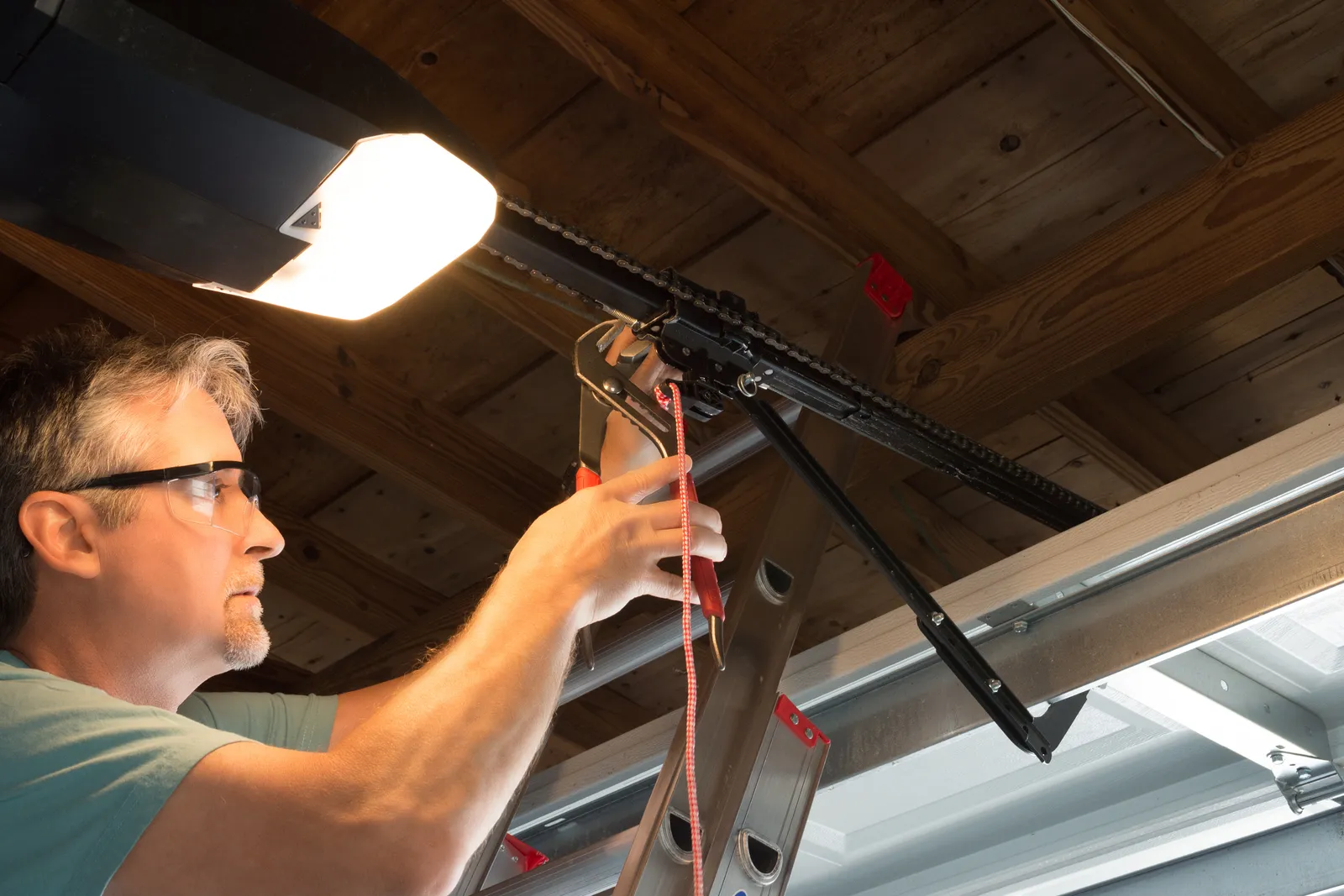
Garage door opener repair becomes urgent the moment your door reverses halfway or refuses to close at all. San Diego homeowners often assume the opener motor is dying, but the real culprit is usually a pair of small safety sensors near the floor. This guide explains why sensors cause closing failures, which checks are safe to try yourself, and when you need a licensed professional from Door & Roll Garage Door.
Why Your Garage Door Won't Close
Most closing failures trace back to the photo-eye safety sensors, not the opener motor itself. These two small sensors sit a few inches off the ground on each side of the track and send an invisible beam across the doorway. If that beam gets interrupted, blocked, or misaligned, the opener assumes something is in the door's path. As a result, it stops or reverses instead of closing, even when the garage floor is completely clear.
This behavior can feel confusing because the motor itself sounds perfectly healthy. However, the opener is simply obeying its programming, which prioritizes safety over convenience every time. Understanding this distinction saves San Diego homeowners from replacing a working opener when the fix is actually a five-minute sensor adjustment.
The Federally Required Photo-Eye Reversal System
Every garage door opener sold since 1993 must include a photo-eye reversal system by federal law. This safety feature protects children, pets, and vehicles from being struck by a closing door. The LiftMaster manufacturer support site explains how the sensors communicate constantly while the door cycles. Therefore, any break in that communication, however brief, halts the closing sequence immediately.
Because this system is mandatory, every opener you buy today, regardless of brand, includes it. Sensor troubleshooting looks nearly identical whether you own a LiftMaster, Chamberlain, Genie, or Wayne Dalton unit. So once you understand one system, you understand them all.
Common Causes of Garage Door Opener Repair Calls
Sensor-related service calls almost always fall into a handful of predictable categories. Dirty lenses, crooked alignment, and glare are the most frequent offenders across San Diego homes. Loose wiring and aging opener components cause the rest. Understanding which category you're dealing with saves time before you call for help.
- Dust, cobwebs, or pollen coating the sensor lenses
- Sensors knocked out of alignment by a broom, bike, or parked car
- Bright coastal sun or headlights creating glare across the photo eye
- Frayed, pinched, or rodent-damaged sensor wiring
- A failing logic board inside the opener unit
Sun Glare Is a Real San Diego Problem
Coastal sun angles in San Diego and Carlsbad create a surprisingly common sensor issue. Because these two cities face west toward strong afternoon light, low sun can wash out the sensor's receiver at certain times of day. Homeowners often notice the door works fine in the morning but reverses every evening. In addition, reflective surfaces like white driveways or car windshields can bounce extra glare directly into the lens.
This pattern often confuses homeowners because the sensors look untouched and perfectly aligned. The glare only appears for a narrow window as the sun angle shifts each afternoon. For example, a garage facing the coastline may struggle only between four and six in the evening during summer months. Once you identify that pattern, a simple shade or angled sensor bracket usually solves it permanently.
How Sensor Wiring Fails Over Time
Wiring problems develop gradually, so they're easy to miss until the door starts failing intermittently. Garage wiring runs low along the floor, which exposes it to moisture, foot traffic, and the occasional rodent looking for shelter. Over months, insulation can crack or wires can loosen at the connection terminals. Meanwhile, vibration from daily opener use slowly works screws and clips out of place.
As a result, you may notice the door closing fine some days and failing on others with no clear pattern. This inconsistency is actually a strong clue that wiring, not alignment, is the real problem. Because these faults hide inside walls or conduit, they're difficult to diagnose without testing equipment and experience.
Reading the Blinking LED Codes
Your opener's LED light blinks in patterns that identify the exact problem area. Most LiftMaster and Chamberlain units flash a specific number of times to indicate sensor, wiring, or motor faults. So before assuming the worst, count the blinks and check your opener's manual or the manufacturer's code chart. This single step often points directly to a dirty lens or a wiring issue rather than a costly opener replacement.
Genie, Clopay, Amarr, and CHI openers use similar diagnostic lights, though the exact blink count varies by model. Keeping your owner's manual handy, or looking up your model number online, speeds up troubleshooting considerably. If the code points to a wiring or logic fault instead of sensors, that's a strong sign the issue needs a professional.
Safe DIY Checks Before Calling for Garage Door Opener Repair
You can rule out the easiest fixes yourself in under ten minutes. Because these steps require no tools and no electrical work, they're safe for any San Diego homeowner to try first. If the door still won't close afterward, that's your signal to call a professional.
- Wipe both sensor lenses gently with a soft, dry cloth to remove dust or pollen.
- Check that both sensors point directly at each other and sit at the same height.
- Clear any boxes, tools, or vehicles from the beam's path between the sensors.
- Shield the sensors from direct sunlight using a hand or small cardboard piece to test for glare.
- Watch the small LED light on each sensor; a steady light usually means alignment is correct.
If you complete these steps and the door still reverses, resist the urge to force alignment further. Bending the sensor brackets by hand can crack the mounting and create a new problem. Instead, note what you observed, since that information helps a technician diagnose the issue faster.
When You Need a Professional for Garage Door Opener Repair
Call a professional once wiring, the logic board, or an aging opener unit is suspected. These issues involve electrical components that shouldn't be handled without training. For example, chewed wiring near the sensors can create intermittent faults that look like alignment problems but aren't. A logic board nearing failure may cause random reversing even with perfectly aligned sensors.
Door & Roll Garage Door has diagnosed sensor and opener issues across San Diego County for years as a family-operated company. We're licensed and insured, rated 4.9 stars from 595 reviews, and available 24/7 for same-day service. Every visit includes upfront pricing and a workmanship warranty, so you know the cost before work begins and the repair is backed afterward. Our technicians service every major brand, including LiftMaster, Chamberlain, Genie, Clopay, Amarr, Wayne Dalton, Raynor, and CHI.
What to Expect During a Professional Diagnostic Visit
A technician starts by testing sensor alignment and voltage before touching any other component. This quick check often isolates the fault within minutes rather than hours. Next, the technician inspects wiring along its full length, looking for pinches, corrosion, or loose terminals hidden from view. If the sensors and wiring both test clean, attention shifts to the logic board and motor circuitry.
Because every diagnostic step is explained upfront, you'll know the cost before any repair begins. So there are no surprise charges once the technician identifies the actual cause. Most sensor and wiring repairs finish the same day, often within a single visit.
Serving San Diego and Carlsbad Homeowners
Local homeowners trust Door & Roll because our team understands the coastal sun and older opener models common throughout the region. Whether it's a Carlsbad home with west-facing sensors or a San Diego garage with worn wiring, we diagnose the actual cause instead of guessing. You can request a free quote in minutes, and our technicians arrive the same day in most cases. Learn more about our team on the About page, or visit our Home page for a full overview of our services.
If sensor troubleshooting doesn't solve the reversing problem, our garage door opener repair technicians can pinpoint wiring faults, logic board failures, or worn components quickly. We also offer full garage opener installation when replacement makes more sense than repair. Residents throughout the region rely on our garage door service in Carlsbad for the same fast, honest diagnostics. Ultimately, garage door opener repair is usually a smaller fix than homeowners expect, especially once sensor alignment and glare are ruled out.