Garage door maintenance keeps your home safe, your opener healthy, and your budget intact. San Diego homeowners use their garage door several times a day, so wear adds up fast. Door & Roll Garage Door is a family-operated, 24/7 company serving San Diego County with same-day help. This guide teaches the simple balance test every homeowner should run twice a year to catch spring problems early. It takes two minutes and needs no tools.
Why Garage Door Maintenance Depends on Proper Balance
Garage door maintenance starts with checking balance, not just lubricating hinges. A balanced door carries its own weight across two springs, so the opener only guides it. However, when springs weaken unevenly, the opener strains with every cycle. As a result, that extra strain shortens the motor's life.
What the Balance Test Checks
The balance test measures whether spring tension still matches the door's weight. It takes under two minutes and needs no tools. It can reveal problems a quick glance would miss. For example, one spring may quietly carry more load than the other.
How to Run the Garage Door Balance Test
Running the balance test is simple, so the steps take only a few minutes. However, they must happen in a specific order. Close the door fully and disconnect the opener before you start. This keeps the motor from hiding a real balance problem.
- Close the garage door completely and find the manual release cord, usually a red handle.
- Pull the manual release to disconnect the door from the opener carriage.
- Lift the door by hand to roughly waist height, about halfway up the track.
- Let go of the door gently and watch what happens next.
A properly balanced door stays exactly where you released it. Therefore, if the door drifts, drops, or climbs on its own, the springs need attention. A door that slams down fast usually has weak springs, while one that shoots upward has springs wound tight.
Balance Testing for Two-Car and Single-Car Doors
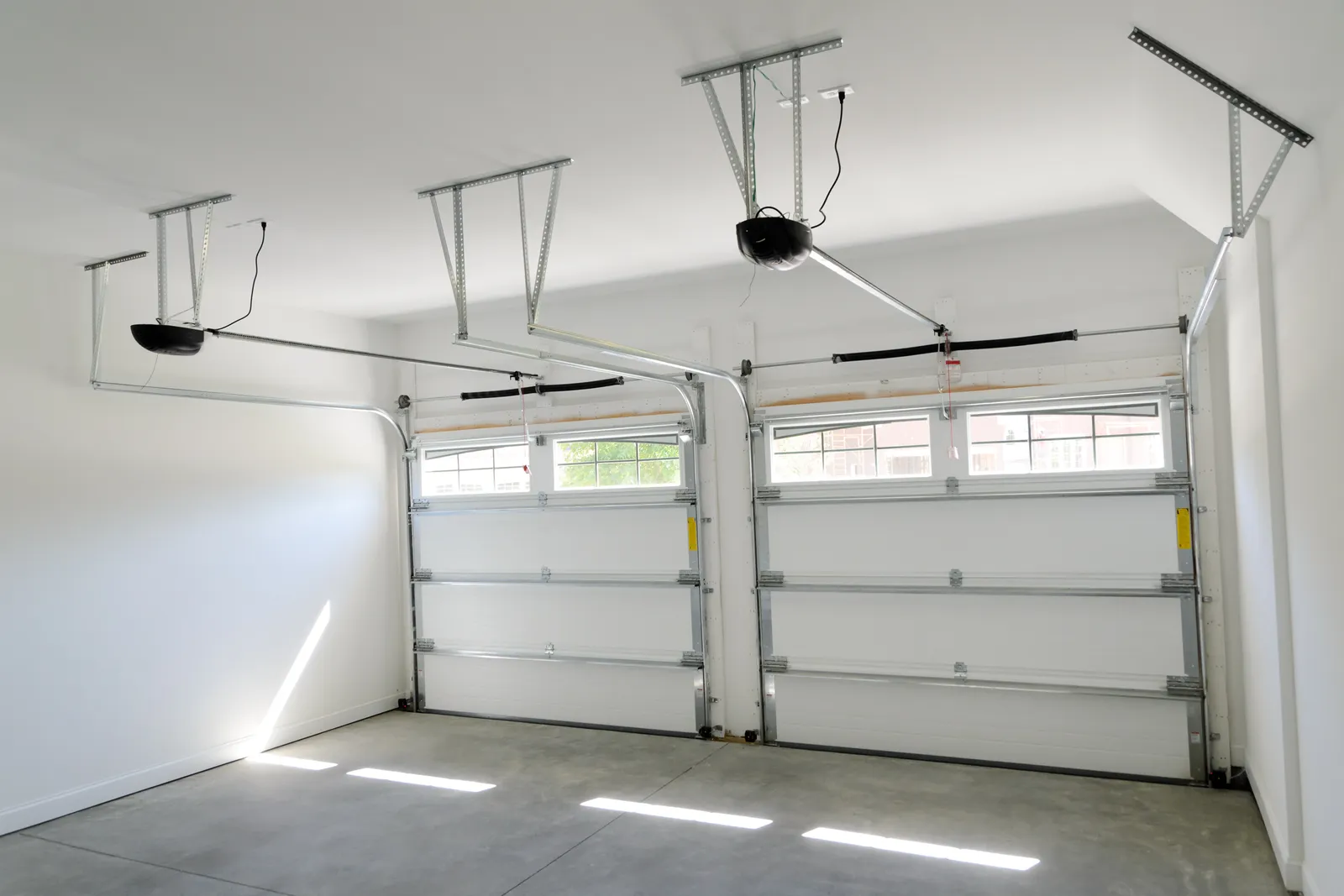
Two-car doors carry more weight, so their springs work harder. As a result, a heavier door often fails the balance test more dramatically. Single-car doors can still drift out of balance from age alone. Either way, both sizes benefit from the same twice-yearly check.
Common Causes of Garage Door Spring Imbalance
Spring imbalance usually develops slowly, not overnight. Normal wear stretches torsion springs a little more with every cycle. In addition, temperature swings between summer heat and winter mornings affect coil tension. A door bumped by a car or bike can also shift alignment. Meanwhile, rust from coastal humidity adds friction, which hides a true balance problem during casual use.
Older doors face more of these issues than newer ones. Because springs carry a rated cycle life, daily use adds up quickly. A door installed more than seven years ago likely has its original springs. Replacing springs before they snap avoids a jammed door at the worst possible time.
How Often Should San Diego Homeowners Test Balance
Most manufacturers recommend testing garage door balance twice a year. LiftMaster and Chamberlain both suggest checking every six months. San Diego's coastal humidity near Del Mar can shift spring tension over time. So, testing every six months catches drift before it becomes a bigger repair. Families with teen drivers or a home business should test more often.
Many homeowners tie the test to daylight saving time changes. Therefore, the twice-yearly schedule becomes easy to remember. In addition, a phone calendar reminder adds extra consistency. A five-minute habit twice a year prevents most emergency calls.
Safety Cautions: Why Spring Adjustments Are Not a DIY Job
Never adjust garage door spring tension yourself. Springs store enormous energy, so a slip during adjustment can cause serious injury. Because of that risk, treat a failed balance test as a call to a licensed technician. Skip the wrench and skip the ladder. A trained technician has the tools and training this job requires.
What a Failed Balance Test Means
A failed test almost always points to worn or mismatched springs. Several warning signs often show up alongside the imbalance. These signs confirm the diagnosis before a technician even arrives. Watch for these signals in the days before or after testing:
- Grinding or popping noises when the door opens or closes
- The opener straining, reversing, or stalling mid-cycle
- One side of the door sagging lower than the other
- A remote or wall button that responds slower than usual
If any of these signs appear, schedule garage door spring repair right away. Waiting only adds strain to an opener that is already struggling. A quick repair now often costs far less than a full opener replacement later. An unbalanced door can also damage the tracks and rollers.
Pairing the Balance Test With a Visual Inspection
The balance test works best alongside a quick visual check. So, look at the cables, rollers, and hinges while the door is disconnected. Frayed cables or rusted rollers often explain why a door tests unevenly. Therefore, note anything unusual and mention it when you call for service.
What Happens If You Ignore an Unbalanced Door
Ignoring an unbalanced door rarely fixes itself. The opener keeps compensating, working harder with every open and close cycle. Eventually, the motor gears wear down and the circuit board overheats. An unbalanced door can jump off its tracks under stress. So, a two-minute test today can prevent a costly, dangerous problem later.
Ignoring the problem also risks the door falling unexpectedly. Because of that, a door that drops without warning can damage a vehicle underneath. It can also injure anyone standing in the doorway. None of that risk is worth skipping a two-minute test.
Building Garage Door Maintenance Into Your Routine
Consistent garage door maintenance protects your springs, your opener, and your budget. So, pair the twice-yearly balance test with a professional inspection for the best results. A trained technician catches issues that homeowners often miss. According to the Door and Access Systems Manufacturers Association, regular inspection extends a garage door's lifespan. As a result, that single habit can add years to your system's service life.
Simple Maintenance Tasks Homeowners Can Do Between Visits
Beyond the balance test, a few habits help between professional visits. For example, wipe down tracks and remove debris every few months. You can tighten visible bolts if you notice movement, but leave springs alone. Therefore, these small habits complement the balance test rather than replace it.
San Diego and Del Mar: Local Maintenance Considerations
San Diego's mild climate is easy on garage doors compared to colder regions. However, salty coastal air near Del Mar can still corrode hardware over time. Homes close to the beach benefit from more frequent balance checks. Meanwhile, inland neighborhoods deal more with heat and dust buildup. Either way, a twice-yearly test fits any San Diego County home.
Neighborhoods like La Jolla and Chula Vista see similar coastal and inland effects. Opener strain is the clearest early warning sign in any neighborhood. A quick call to a local technician resolves most issues in one visit.
What to Expect When You Call for Garage Door Spring Repair
Calling for help after a failed balance test is straightforward. A technician inspects both springs, the cables, and the tracks together. Because springs work as a pair, technicians usually replace them together too. Therefore, this keeps future balance problems from starting on the opposite side.
Same-day appointments are available across San Diego County. In addition, upfront pricing means you know the cost before any work begins. A workmanship warranty backs every repair we complete. That combination gives homeowners confidence during an already stressful moment.
Why San Diego Homeowners Trust Door & Roll Garage Door
Door & Roll Garage Door has served San Diego County as a licensed and insured, family-operated company. We answer calls 24/7 and often arrive the same day you call. Every estimate comes with upfront pricing and a written workmanship warranty. We're rated 4.9 stars across 595 reviews from local homeowners. Our technicians service LiftMaster, Chamberlain, Genie, Clopay, Amarr, Wayne Dalton, Raynor, and CHI systems.
Homeowners near the coast can count on garage door service in Del Mar the same day they call. In addition, you can visit our home page to see current specials, or learn more about our team. Explore our garage door tune-up and maintenance plans, built around this exact balance check. If your door failed the test today, request a free quote and let our technicians restore proper balance. Consistent garage door maintenance, starting with this simple test, protects your home and your family.